SEO News: June 2026

Martin Hill
The first data on AI traffic in Google Search Console, the future of search, and the impact of the May Core Update. June’s news is here — stay informed and keep up with the market!
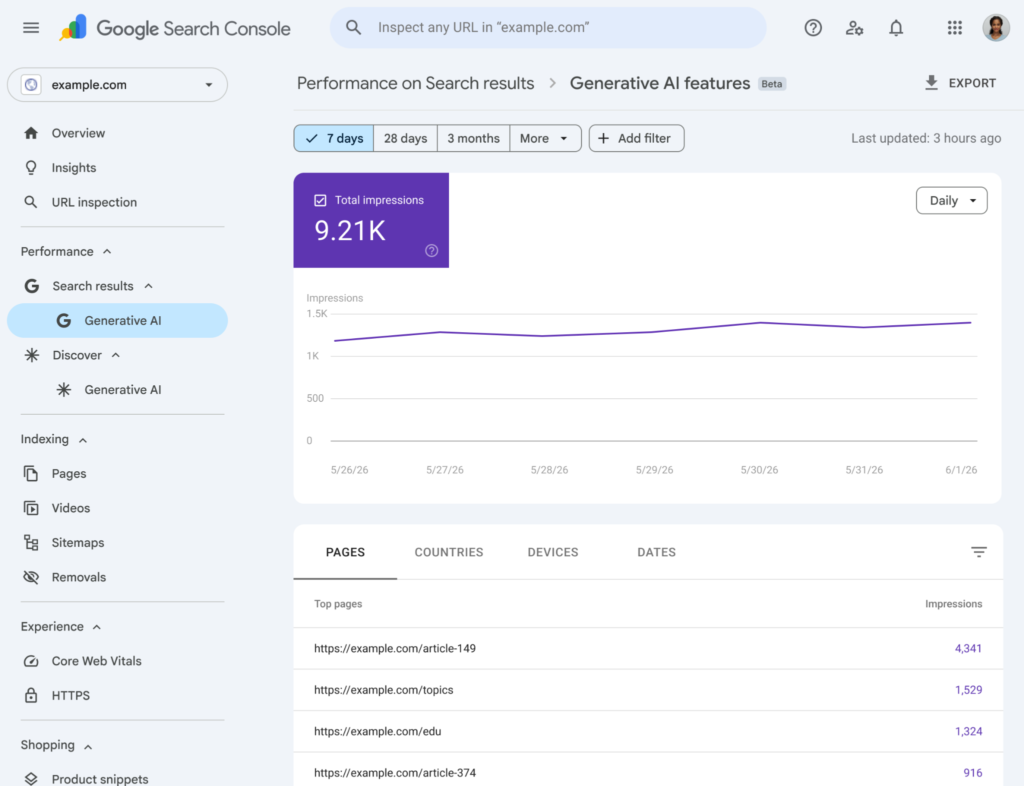
New Reports in Search Console for Generative AI in Search
Google has launched new reports in Search Console focused on performance in generative AI search features. These reports are currently being rolled out to a select group of websites so they can be tested and feedback can be gathered.
- Report Types: Separate reports are available for generative AI features in Search (e.g., AI Overviews, AI Mode) and Discover.
- Available metrics: Reports show impressions, specific URLs, countries, devices (for Search only), and time-based data at various levels of granularity.
- Relationship to other data: The data is now displayed in separate views, but it also remains in the overall performance report.
For webmasters, this presents a new opportunity to more accurately track and analyze their sites’ performance within the context of the ever-expanding capabilities of generative AI search.
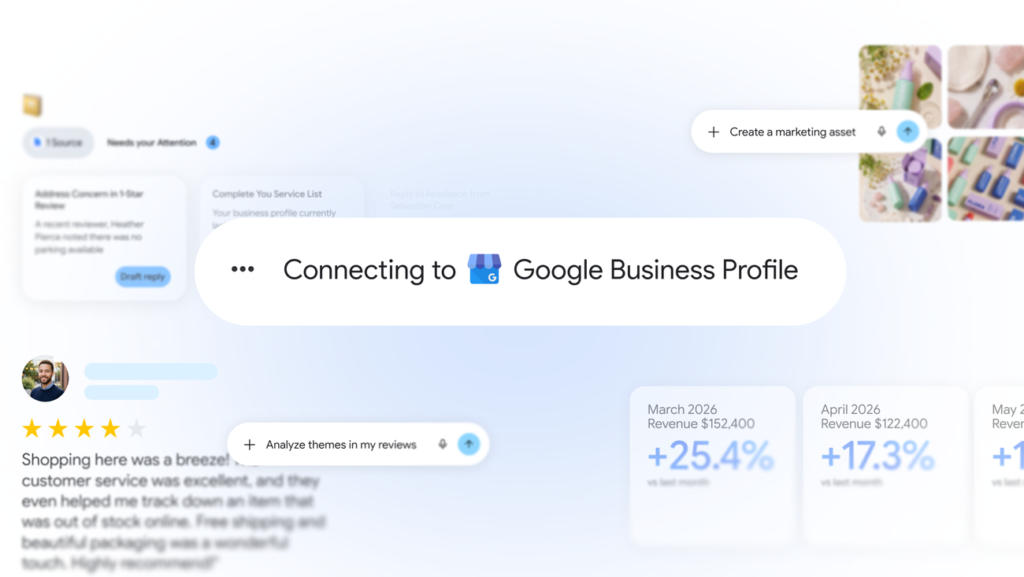
Google Enhances Gemini for Businesses: An AI Assistant for Business Profiles and Content Management
Google is introducing new features for the Gemini app that will transform the AI assistant into a tool for entrepreneurs with a deep understanding of their businesses. These updates are rolling out globally this month.
- Integration with Google Business Profile: Gemini gains access to reviews, customer inquiries, and performance data.
- Analysis and Management: The AI assistant analyzes impressions and calls, and suggests responses to reviews or profile updates.
- Business Notebooks: Serve as a central hub for managing chats, GBP, and proactive recommendations.
For businesses, this means simpler management of their local online presence and more effective interaction with customers.
The U.S. government has suspended access to Anthropic's new AI models, Fable 5 and Mythos 5
The U.S. government has issued a national security order requiring Anthropic to suspend access to its new AI models, Fable 5 and Mythos 5.
As a result, Anthropic had to immediately block access to the models for all of its customers.
- Type of regulation: The regulation is an Export Control Directive that restricts the transfer of products and technologies to foreign countries.
- Government rationale: The U.S. government believes that Fable 5 has security features that can be circumvented; Anthropic views these as minor vulnerabilities.
- Anthropic's Denial: Anthropic denies that there is a security risk and claims to have strong safeguards in place to prevent misuse of the Fable 5 model.
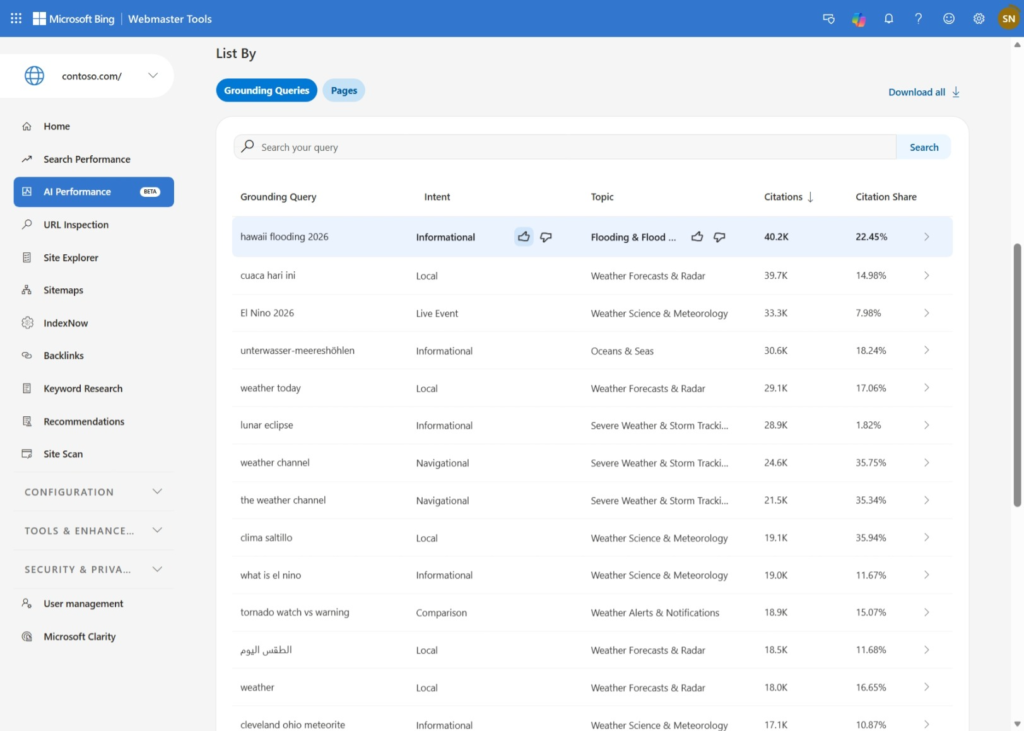
Bing Webmaster Tools is expanding the AI Performance dashboard with new metrics
Microsoft is expanding the tools in Bing Webmaster Tools with four new features for the AI Performance Report, which will help publishers better understand citations in AI-generated responses.
- Intents: Classifies queries leading to citations into categories such as informational, commercial, or research-related.
- Topics: Groups related questions into broader thematic categories, which facilitates analysis.
- Citation Share: Shows the percentage of citations for your website for a given query out of the total number of citations.
This gives users a more detailed understanding of the context and subject matter in which their content is used by AI systems.
Google: Forget Markdown for AI SEO; Instead, Optimize Your HTML
Through John Mueller and Martin Splitt, Google is warning against using Markdown as a solution for optimizing for AI search. They emphasize that it unnecessarily complicates what is essentially a simple matter.
- UX and HTML: Markdown alone does not offer a good user experience compared to the visual capabilities of HTML.
- Duplication of work: Creating separate versions of content (Markdown for LLM, HTML for users) doubles the workload.
- Debugging Issues: Parallel versions are difficult to debug, as bugs in the AI version may go undetected for a long time.
For publishers, this means it is more efficient to optimize existing HTML pages rather than build parallel versions of the content for AI.
Google Search ignores LLMS.txt and AI files
Google recently updated its optimization guide for generative AI search to clarify its stance on LLMS.txt and other files.
- Impact of LLMS.txt: Google Search ignores LLMS.txt files; they have no effect on visibility or ranking.
- Machine-readable files: Google Search (including its AI features) does not use AI-generated text, markup, or Markdown.
For SEO specialists, this means that optimizing these specific files will not provide any benefit in search results.
Mueller Explains How Impressions Are Counted in AI Overviews for Search Console
John Mueller, a Search Advocate at Google, explained on Bluesky how impressions are counted in the new generative AI report in Google Search Console.
- Counting Principles: An impression is counted when a link to your page is displayed in AI Overviews or AI Mode.
- Link activation: If user activation (e.g., clicking) is required to display the link, the impression is counted only after this action has taken place.
The lower numbers in the new Google Search Console AI report may therefore reflect the fact that only actively displayed links are counted.

Sundar Pichai on the Future of AI Search and Google's Monetization
In a recent interview, Google CEO Sundar Pichai confirmed that links and sources will remain an integral part of AI-generated responses and commented on the future monetization of search.
- Transition Process: The transition from traditional search to AI mode will be gradual, not sudden.
- User Satisfaction: Google's internal metrics show a positive user response to AI mode.
- Monetization: Future search monetization will rely on a combination of subscriptions and advertising.
For publishers and SEO specialists, this means that simply appearing in AI-generated answers may not guarantee sufficient referral traffic.

May Core Update: Google is fine-tuning source preferences based on user intent
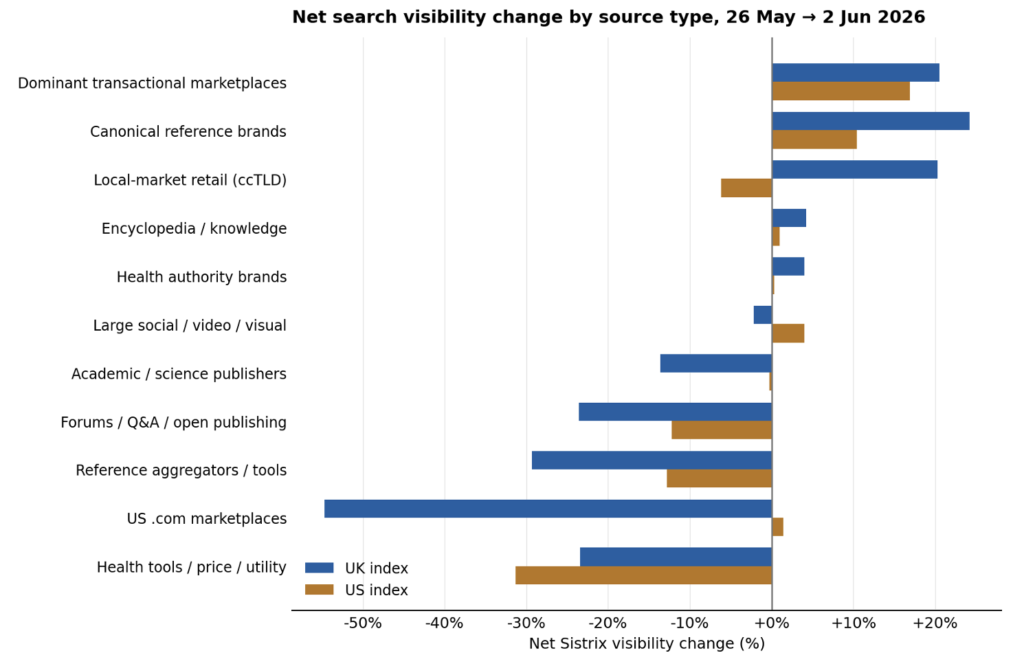
Sistrix analyzed changes in domain visibility in the U.S. and the U.K. following the May Core Update (May 21 – June 2, 2026), which highlighted a shift in visibility toward source types that better match user intent and the expected result format.
- Canonical references: Canonical reference tags saw a +24% increase in visibility in the UK and a +10% increase in the U.S., while reference aggregators saw a -29% decline in the UK and a -13% decline in the U.S.
- E-commerce Localization: In the UK index, e-commerce visibility shifted toward local entities (+20%), while U.S. .com marketplace domains declined by -55%.
- Forums and Q&A: Forums, Q&A, and open publishing platforms saw a decline in visibility (-24% in the UK, -12% in the US), while major social and video platforms remained stable or showed slight growth.
For publishers, this means they need to verify whether their page is truly the best starting point for a given query, market, and result format.
Google Must Allow Publishers in the UK to Opt Out of AI Search, the CMA Orders
The CMA (the UK Competition and Markets Authority) has imposed new requirements on Google that will allow publishers to opt out of having their content used in AI search features. This regulation stems from Google’s designation as a company with significant market power in general search in the United Kingdom.
- Opting out of AI features: Google must provide websites with a way to opt out of AI Overviews and AI Mode.
- Ban on AI Training: Publishers can prohibit the use of their content to train Google's AI models.
- Content Attribution: In AI results, publishers' content must be clearly attributed with visible links.
For content publishers in the United Kingdom, this means the ability to separate visibility in traditional search results from use in AI features.

Apple Unveils Siri AI: Direct Answers from the Web and the Impact on Visibility
At this year's WWDC, Apple unveiled a significantly improved Siri AI that can now draw up-to-date information directly from the web and generate answers on almost any topic. This new feature, set to launch in beta for users later this year, promises deeper integration with the Apple ecosystem.
- Integration: Siri AI is part of Spotlight (iPad, Mac), where users already enter their queries.
- Links: On the Applebot page, Apple mentions the possibility of linking to sources, without providing details on the frequency.
- Content Control: AI usage can be controlled using `Applebot-Extended` in `robots.txt` or the `nosnippet` tag.
Publishers should consider how to effectively structure their content for AI processing, as it will not yet be possible to directly measure traffic from Siri AI.

Sources
- https://www.aleydasolis.com/en/ai-search/google-may-2026-core-update-analysis-intent-market-fit-and-source-type-drove-the-biggest-visibility-shifts/
- https://www.searchenginejournal.com/googles-ceo-is-comfortable-with-ai-mode-replacing-classic-search/577923/
- https://business.google.com/us/think/search-and-video/ai-search-era-brand-authority-strategy/
- https://www.searchenginejournal.com/google-must-let-websites-opt-out-of-ai-search-features-in-uk/577970/
- https://blog.google/products-and-platforms/products/search/new-controls-website-owners/
- https://developers.google.com/search/blog/2026/06/gen-ai-performance-reports
- https://searchengineland.com/google-adds-guidance-on-third-party-seo-tools-services-advice-and-updates-hiring-an-seo-doc-479637
- https://www.searchenginejournal.com/what-apples-gemini-powered-siri-means-for-search-visibility/578931/
- https://blog.google/innovation-and-ai/products/gemini-app/gemini-features-for-businesses/
- https://www.searchenginejournal.com/government-order-shuts-down-fable-5-despite-anthropics-objections/579168/
- https://blogs.bing.com/search/June-2026/New-AI-Visibility-Insights-in-Bing-Webmaster-Tools-Intents-Topics-Citation-Share-Compare
- https://www.searchenginejournal.com/google-cautions-against-markdown-versions-of-websites-for-ai-seo/580235/
- https://www.seroundtable.com/google-llms-txt-files-hurt-help-41512.html
- https://www.searchenginejournal.com/googles-mueller-explains-how-ai-search-impressions-get-counted/580491/
Martin Hill
Martin has been doing SEO since 2012. When he’s not in the woods, on his bike, or with a fishing rod by the water, he’s the head of the Keypers SEO team, where he’s been since 2017. Starting out on his own websites, he now focuses on strategy, technical SEO and project management. He enjoys finding ways to do things better — whether it’s processes, deliverables, or connecting SEO to other channels. SEO is a strategic detective for him — finding what’s not working, understanding the context and designing a solution that makes business sense.